

A small technology fault can quickly become a working-day problem. Staff may lose access to files, email or business systems, whilst unclear responsibility can leave managers unsure who is resolving the issue. For businesses in Southampton and across the South Coast, dependable business IT support in Southampton is about keeping work moving, not simply fixing devices when they fail.
The importance of having good IT support becomes clear when everyday work depends on reliable systems. Effective support combines practical help with monitoring, software updates and clear communication, so staff know where to turn and managers can see what needs attention.
This article explains the operational value of reliable IT support, how to assess whether it is helping your organisation, and what to cover in your next support review.
In short: Good IT support helps a business keep work moving by resolving issues clearly, maintaining systems and addressing avoidable problems through monitoring and updates. It gives staff a clear route to technical help and helps decision-makers understand how technology supports business priorities, so teams can focus on their work.
Key Takeaways
- Look beyond device repairs and consider how reliable IT support can help protect staff time and day-to-day operations.
- Assess whether your support combines practical help with ongoing maintenance and clear communication.
- Use recurring issues, clear ownership and useful updates to judge whether support is helping people work effectively.
- Ask how monitoring, software updates and business reviews keep technology aligned with your organisation’s priorities.
Why does good IT support matter to Southampton businesses?
Good IT support helps maintain business continuity by keeping the systems people rely on dependable and giving problems clear ownership. A working laptop alone is not enough if staff cannot access email, shared files or the services they need to help customers.
For decision-makers, the importance of good IT support lies in its effect on the whole working day. Reliable systems help employees complete routine tasks, serve customers and share information without unnecessary delays.
How can IT problems affect everyday work?
A fault that seems small can interrupt several steps in a task. If email is unavailable, a member of staff may be unable to respond to a customer or receive information needed to proceed. A slow device can make routine work take longer, whilst disrupted access to shared files may leave colleagues waiting for information.
These interruptions can also affect handovers between teams. Dependable support helps staff get issues understood and directed to the right technical people, rather than leaving them uncertain about what to do next.
Why does local business context matter?
Businesses have different working patterns and priorities, so support should reflect how their teams use technology. HJS Technology supports businesses remotely across the UK and provides on-site visits across the South Coast, including Southampton, Portsmouth, Winchester, Eastleigh, Fareham, Dorset, Poole, Hampshire, Salisbury, Wiltshire and Bournemouth.
Regional on-site support can be useful when an issue involves equipment or a workplace setup that benefits from in-person attention. It also gives local businesses a practical way to discuss how IT supports daily operations, whether staff are based in Southampton or elsewhere along the South Coast.
What does good IT support include beyond fixing problems?
Good IT support combines responsive help with ongoing care and business-focused planning. Staff need a clear route to report an issue, access to engineers who can investigate it, and regular attention to the systems the organisation relies on.
A helpdesk gives employees a point of contact when they need technical assistance. Real engineers can work through the cause of an issue and explain what is happening in plain language, helping staff understand the next steps without needing to diagnose the problem themselves.
Day-to-day assistance helps with user issues, proactive maintenance looks after systems, and strategic reviews connect technology choices with business priorities. Each has a different purpose, and together they give support a broader role than simply responding to requests.
What do monitoring and patching do for a business?
Monitoring helps oversee systems and identify areas that may need attention. Patching means applying software updates, which can include fixes and improvements from the software provider. These activities help keep systems maintained, but they cannot prevent every outage or security incident.
When reviewing support, ask what systems are monitored, how software updates are handled and how issues that need attention are communicated. This makes it easier to understand how system upkeep fits into the service, rather than treating it as an afterthought.
How do quarterly strategic reviews add business context?
Quarterly strategic reviews create a regular opportunity to discuss whether technology still supports the organisation’s goals. A business might use the conversation to consider upcoming changes, recurring support themes or where staff need better tools. This is one part of proactive IT support, connecting everyday service with longer-term priorities.
Prepare for a review by noting repeated issues, planned changes and tasks that staff find difficult because of the technology they use. That gives the conversation a practical focus and helps clarify what to prioritise next.
If security is part of the discussion, consider how penetration testing and cyber security fit into your organisation’s wider approach to protecting systems and information.
If you’re considering how these elements could fit together for your organisation, discuss your IT support needs with HJS Technology.
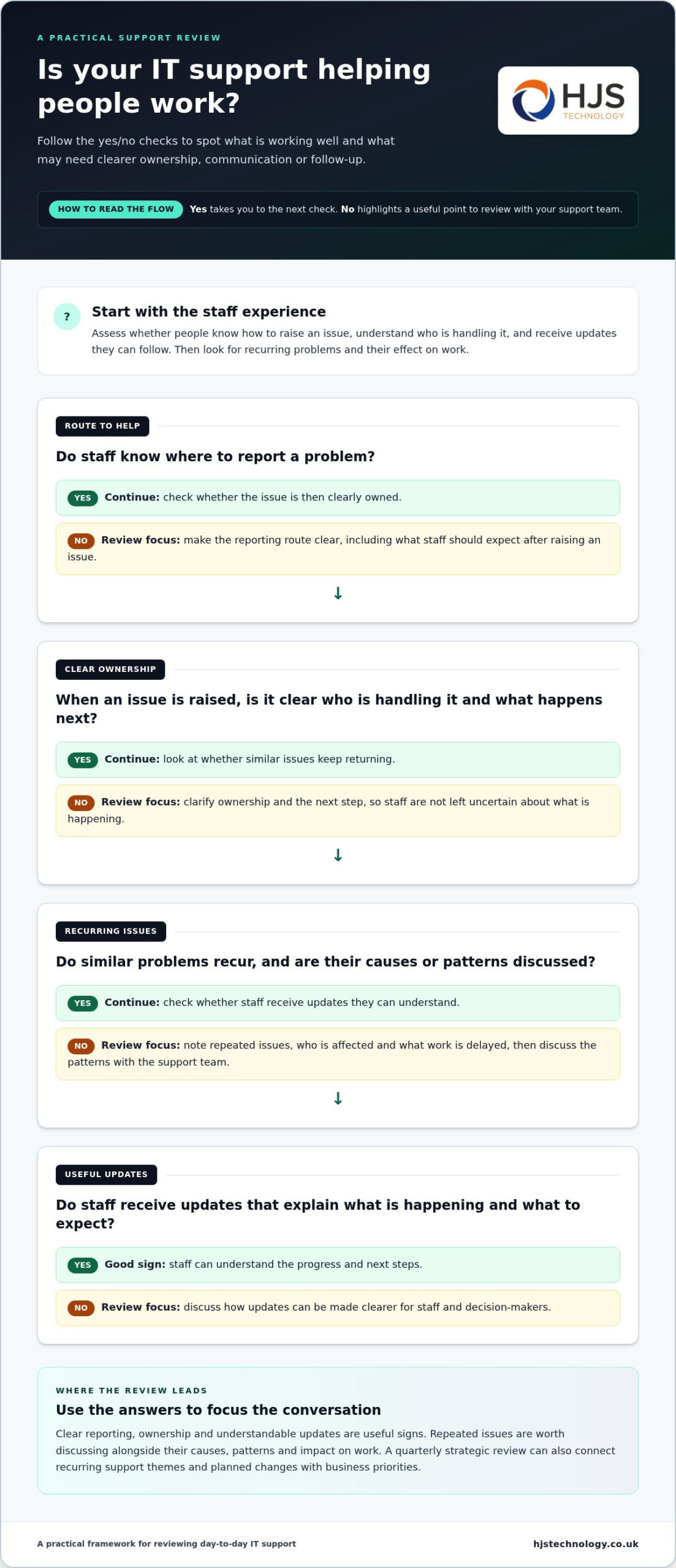
How can you tell whether your IT support is helping?
Assess IT support by how clearly it helps people work and manage technology issues. Look for patterns in recurring problems, clear ownership when something needs attention, and communication that helps staff and decision-makers understand what happens next.
A short review can turn general impressions into useful discussion points. Consider these questions:
- Do similar issues keep returning, and are their causes or patterns discussed?
- Does someone take clear ownership of an issue, including explaining who is handling it and what the next step is?
- Do staff know where to raise issues and receive updates they can understand?
Which questions should a business review first?
Start with the employee experience. Ask staff whether they know how to report a problem and whether they understand what to expect after doing so. Then look at recurring issues: are they recorded and discussed with the support team, along with their effect on work?
This helps distinguish an isolated difficulty from a pattern worth addressing. For example, repeated access problems may affect more than one person or process, so include who is affected and what work is delayed when you raise the issue.
How can support stay connected to business priorities?
Regular reviews can connect technology discussions with planned changes, such as new ways of working or changing operational needs. The aim is not to create technical goals for their own sake, but to consider whether systems and support remain suited to the organisation’s direction.
For a wider view of reliable managed services for Hampshire businesses, consider how service, maintenance and planning fit together. Where security is part of that picture, discuss how cyber security services support the organisation’s wider priorities.
Bring these questions to your next support review and focus the discussion on what will help your organisation work effectively. Clear responsibilities, useful updates and an agreed next step make it easier to turn general concerns into practical action.
How does HJS Technology support Southampton businesses?
HJS Technology provides managed support that brings helpdesk assistance, system monitoring, software patching and strategic reviews together. Based in Southampton, the team supports businesses remotely across the UK and provides on-site visits across the South Coast, connecting practical technical help with an understanding of local business needs.
What can businesses expect from HJS Managed IT Support?
A UK-based helpdesk gives staff a clear place to raise IT issues. Real engineers investigate and work through technical problems, whilst proactive monitoring helps oversee systems and patching applies software updates as part of ongoing upkeep. These activities support day-to-day operations, without guaranteeing that every issue can be avoided.
For businesses looking for managed IT support, quarterly strategic reviews add another layer: a regular opportunity to discuss technology in relation to business priorities. HJS Technology is also ISO 27001 certified, a relevant indication of its focus on information security management.
What is a useful next step for a local business?
Bring a clear picture of current operational challenges to an initial discussion. It could include recurring technology issues, areas where staff need support, and near-term changes that may affect systems or working practices. For business owners considering an IT support company in Southampton, these details can help make the conversation specific and useful.
Good support should understand both immediate needs and upcoming priorities. A practical discussion can help you explore how support responsibilities, system upkeep and planning could fit your organisation.
To discuss your business’s IT support needs with HJS Technology, get in touch with the team.
Make your next IT support conversation count
Good support should make it easier to plan ahead, not just keep pace with today’s demands. Before speaking with a provider, consider what your organisation needs technology to make possible over the coming months, whether that means supporting a change in how your team works, improving coordination or giving staff clearer routes to assistance.
It can also help to agree what effective support would look like for your business. Think about the outcomes that matter to your team and how you will recognise progress. The importance of good IT support is not only resolving immediate faults, but also understanding those priorities and shaping support around them.
A focused conversation can help you decide whether your current arrangements fit where the business is heading, and what to prioritise next. You do not need to arrive with technical answers, just a clear view of the challenges and ambitions you want support to address.
With the right conversation, you can take the next step with greater clarity and confidence.
Frequently Asked Questions
Can good IT support help reduce business downtime?
It can help limit the impact of disruption by giving staff a clear way to report problems and understand what to do whilst they are being addressed. Businesses can also consider which tasks depend on particular systems and plan sensible alternatives for essential work. No provider can guarantee that downtime will never occur, so discuss how issues are prioritised and communicated rather than expecting disruption to be eliminated.
What should good IT support include for a small business?
The right arrangement depends on the organisation’s size, working practices and reliance on technology. A small business might first map which systems are essential, who uses them and what happens if access is interrupted. This helps shape support around real needs, such as staff onboarding, changes to working arrangements or advice on technology decisions, rather than adopting the same package as every other business.
Is IT support only useful when something goes wrong?
No. Support can also help a business prepare for planned changes, such as introducing new staff, moving premises or changing how teams share information. Raising these plans early gives the business and its support team time to consider the technology involved and coordinate next steps. This forward planning can be useful alongside assistance with day-to-day technical questions, without assuming every issue can be prevented.
How can a business tell if its IT support is working well?
Keep a brief record of the issues staff raise, the work affected and any follow-up needed. Reviewing these notes can reveal whether the same operational concern keeps surfacing and help make support conversations more specific. Good support should also explain decisions clearly, so managers can see how technical work relates to business needs without relying on formal performance measures.
Does HJS Technology provide IT support in Southampton?
Yes, HJS Technology is based in Southampton and supports businesses remotely across the UK, with on-site visits across the South Coast. For a useful first conversation, outline the operational pressures you want to address, the systems your staff rely on and any changes planned for the coming months. You do not need technical terminology or a detailed specification to explain what your organisation needs.