
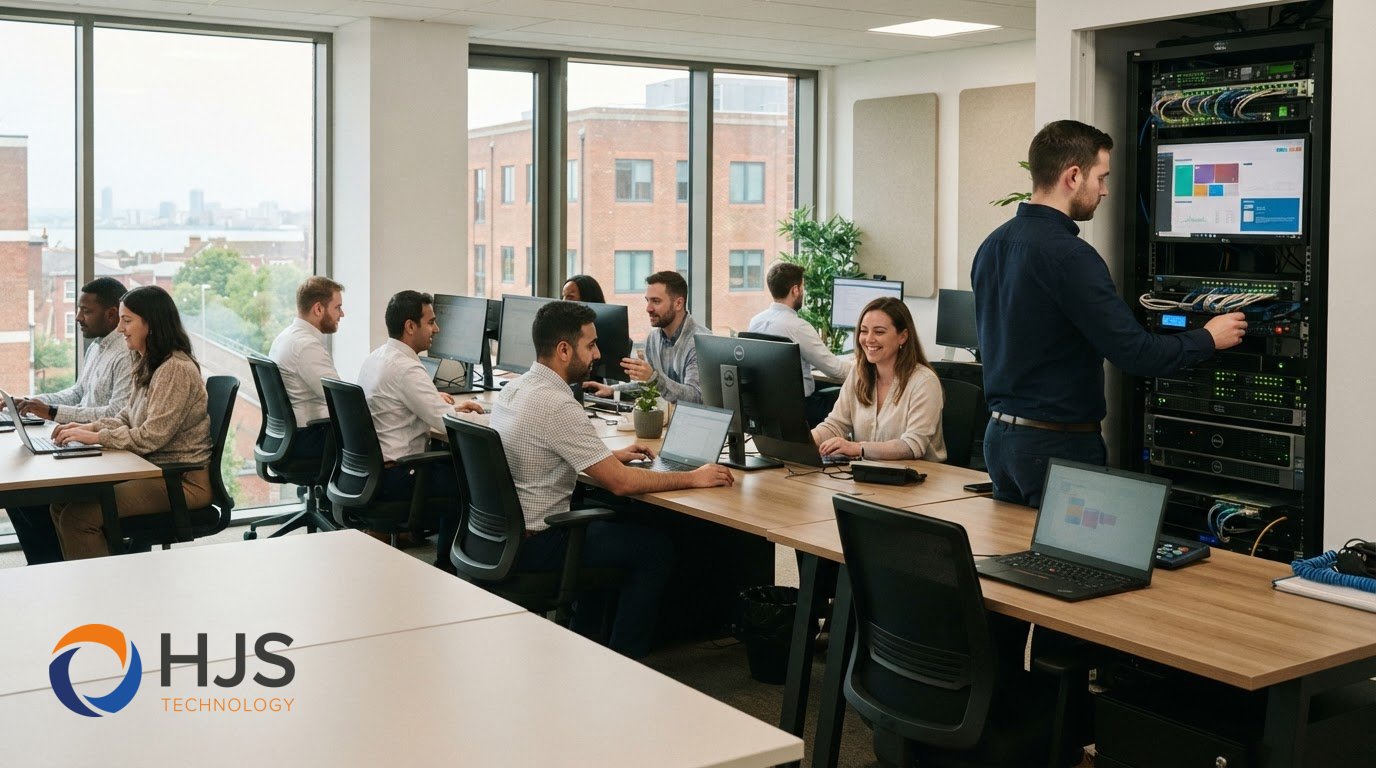
Waiting for an office server to fail before calling an engineer is the single most expensive way to manage commercial technology. Investing in proactive IT maintenance services through dedicated business IT support in Southampton prevents sudden crashes by identifying hardware degradation and software conflicts early. For organisations across Hampshire, unannounced downtime directly drains productive billable hours and pulls management away from core operations.
You likely recognise the frustration of chasing technicians over basic helpdesk tickets whilst worrying about unpatched vulnerabilities. Preventative routines, automated telemetry, and disciplined update schedules resolve system bottlenecks before your staff encounter any disruption.
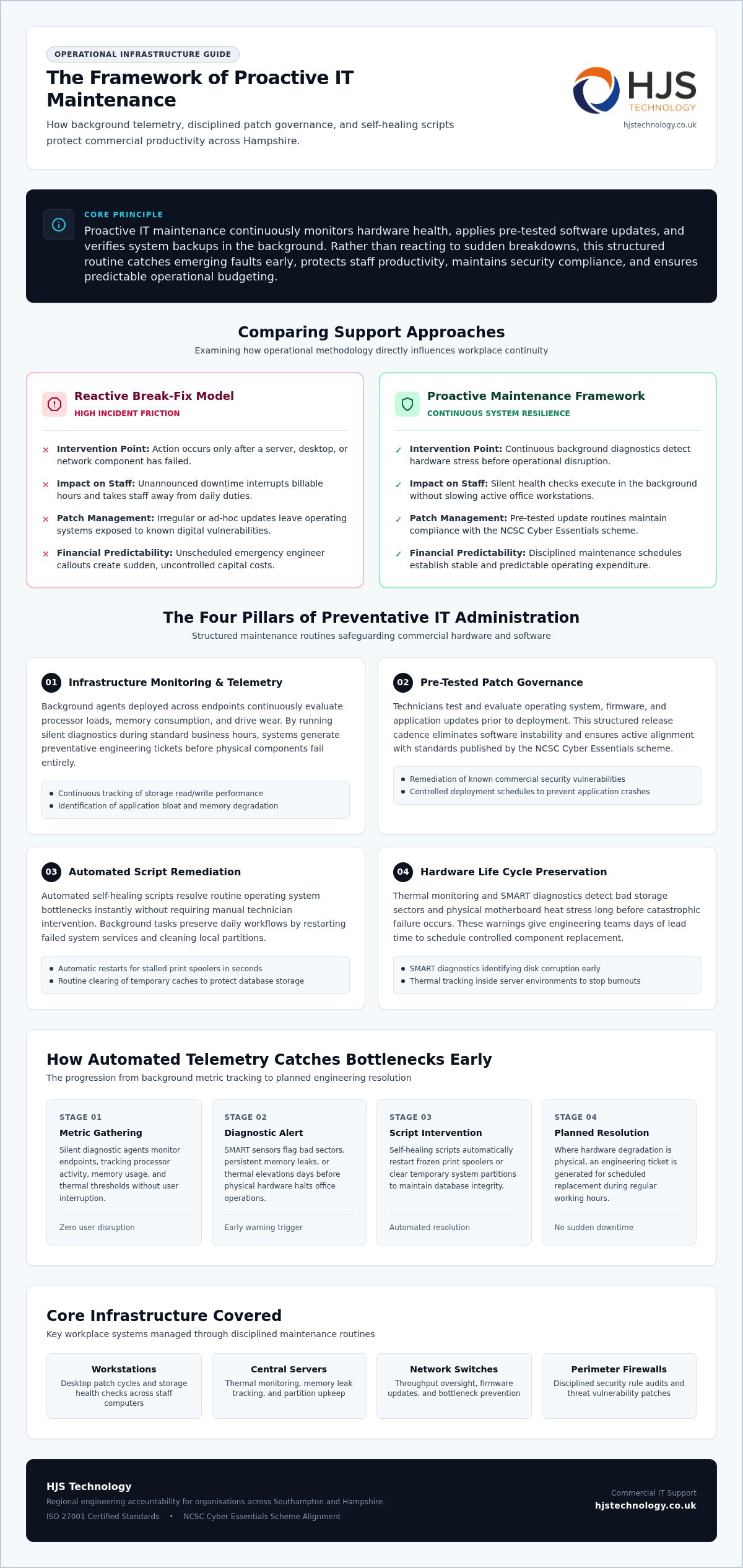
In short: Proactive IT maintenance continuously monitors hardware health, applies pre-tested software updates, and verifies system backups in the background. Rather than reacting to sudden technical breakdowns, this structured routine catches emerging faults early, protects staff productivity, maintains security compliance, and ensures predictable operational budgeting for your business.
Key Takeaways
- Discover how proactive IT maintenance services replace disruptive downtime with automated background checks and structured update cycles.
- Learn how automated system telemetry detects failing hardware components and storage bottlenecks days before equipment halts office productivity.
- Identify the essential operational criteria within service agreements that separate preventative care from reactive helpdesk ticketing.
- Understand why regional accountability across Hampshire and verifiable standards like ISO 27001 protect your operational data.
What are proactive IT maintenance services and what do they include?
Proactive IT maintenance services provide continuous, automated background administration that resolves technical faults, applies security patches, and stabilises systems before failures disrupt daily operations. Rather than waiting for workstations or network equipment to break down, this structured approach identifies underlying faults during ordinary business hours. It replaces sudden emergency interventions with planned, reliable maintenance cycles.
Core coverage spans physical desktop workstations, central server environments, network switches, and perimeter firewalls. Scheduled background checks preserve hardware longevity by identifying thermal stress, memory leaks, and storage degradation long before equipment fails. Organisations increasingly combine this diligence with specialised AI and automation services to streamline routine system optimisation across their workplace.
Continuous infrastructure monitoring and background health checks
Continuous monitoring relies on background agents deployed across all endpoints to track processor loads, memory consumption, and storage drive wear. These silent diagnostic checks execute without interrupting active computer users or slowing everyday office applications. When hardware telemetry breaches safe operating thresholds, the system immediately generates an engineering ticket before physical components fail entirely.
Software patch management and vulnerability remediation
Structured patch governance involves disciplined release schedules for operating systems, firmware, and third-party commercial applications. Experienced technicians evaluate and test updates prior to widespread deployment, ensuring unstable patches never cause application crashes. Crucially, systematic patching remediates known digital vulnerabilities rapidly, maintaining verifiable alignment with standards set by the NCSC Cyber Essentials scheme.
How automated telemetry and monitoring prevent unscheduled downtime
Real-time telemetry catches physical component degradation days before catastrophic breakdown occurs. Automated sensors relay constant operational metrics back to central management dashboards, moving businesses away from historical manual technician visits. By integrating contemporary ai and automation services, modern workplace infrastructure corrects small inefficiencies before they spiral into disruptive operational outages.
Automated scripts actively resolve routine operating system bottlenecks without requiring human intervention. When reviewing maintenance frameworks, following guidance from the NCSC on system monitoring and resilience ensures automated oversight aligns with recognised national security standards. If you want to audit your current system resilience, you can speak with our engineering team about your setup.
Early warning indicators for storage and hardware degradation
Modern drives use SMART (Self-Monitoring, Analysis, and Reporting Technology) diagnostics to detect bad sectors before commercial files suffer corruption. Background telemetry tracks persistent memory leaks, alerting engineers before application bloat degrades daily user speeds. Thermal tracking also flags overheating hardware inside poorly ventilated server rooms, avoiding permanent processor or motherboard failure.
Automated script remediation for routine service failures
Self-healing scripts automatically detect and restart stalled print spoolers or frozen local backup services within seconds. Scheduled routines clear out bloated temporary directories, preventing system partitions from filling up and freezing central databases. These preventative automations preserve core operations quietly, allowing proactive IT maintenance services to maintain unbroken commercial software availability.
Evaluating an IT maintenance agreement: Key operational criteria
A comprehensive IT agreement guarantees scheduled preventative upkeep, disaster recovery testing, and telemetry monitoring rather than simple break-fix ticket logging. When assessing provider proposals, decision-makers should look beyond basic helpdesk access to examine actual engineering routines. Understanding what proactive IT maintenance services require helps ensure your supplier actively manages operational risk.
| Service Element | Reactive Support | Proactive Maintenance |
|---|---|---|
| Fault Resolution | Starts after a user reports an outage | Automated telemetry resolves issues beforehand |
| Patch Management | Ad-hoc or deferred until problems occur | Scheduled, pre-tested monthly deployment |
| Data Resilience | Untested backups until disaster strikes | Routine test restores and integrity checks |
Response time targets versus incident resolution benchmarks
Service level agreements frequently distinguish between initial ticket acknowledgement times and active engineering resolution benchmarks. Critical server outages naturally require immediate prioritisation over minor workstation display queries. Having accessible engineers across Hampshire ensures hands-on hardware repairs happen quickly when remote intervention cannot resolve physical faults.
Backup verification and disaster recovery routine testing
Daily backup alerts only confirm data transfer, not data readability. Rigorous maintenance includes scheduled test restores, proving files and databases can be recovered to satisfy corporate insurance requirements. Coupling cloud repositories with local business continuity appliances ensures rapid disaster recovery whenever unforeseen disruptions threaten operations.
Transparent monthly reports detailing patch compliance and hardware wear confirm that scheduled maintenance occurred. Regular strategic reviews keep technical roadmaps aligned with commercial goals rather than leaving systems to drift.
Selecting a proactive IT maintenance partner in Hampshire
Selecting a local maintenance partner ensures rapid hands-on engineering intervention whenever physical equipment or office networking fails. Choosing an ISO 27001 certified organisation demonstrates that your technology provider adheres to stringent, independently audited information security practices. For commercial organisations across Southampton, Portsmouth, and Winchester, regional proximity guarantees direct operational accountability and practical support when you need it most.
Local engineering presence and rapid on-site assistance
Southampton-based engineers can arrive on site quickly to replace faulty network switches, failing power supplies, or degraded hard drives. Distant national call centres often log tickets promptly but falter when an unexpected physical breakdown demands immediate desk-side attention. Having supported commercial teams across Hampshire since 2007, HJS Technology combines extensive regional knowledge with dedicated, accessible engineering support.
Structuring an onboarding audit and maintenance roadmap
A reliable partnership begins with a detailed discovery audit examining physical cabling, local network switches, endpoint devices, and software licences. This initial review identifies lingering security vulnerabilities and allows technicians to replace obsolete operating systems smoothly without disrupting daily workplace productivity. Implementing disciplined proactive IT maintenance services replaces volatile emergency repair invoices with predictable operational budgeting and continuous system health.
Auditing your existing technology arrangements reveals whether your current supplier actively prevents issues or merely logs helpdesk tickets after disruption occurs. Establishing clear resolution benchmarks and automated monitoring routines safeguards your billable staff hours against preventable downtime. You can begin reviewing your technical infrastructure today by booking an operational assessment through the HJS Technology contact page.
Eliminating business downtime with planned technical care
Shifting away from reactive repairs directly protects your billable staff hours and keeps everyday workplace operations moving smoothly. Investing in proactive IT maintenance services replaces unexpected hardware failures and patch vulnerabilities with silent background telemetry, automated script remediation, and verified backup testing. This planned approach turns commercial technology from a recurring source of friction into a predictable operational asset.
As an accredited Microsoft Solutions Partner established in 2007, HJS Technology provides businesses across the central South Coast with dependable engineering support and rigorous data governance. Taking control of your workplace infrastructure removes technical uncertainty and ensures your workstations, servers, and cloud environments actively support commercial growth. Practical oversight ensures your team stays focused on productive work every single day.
A structured evaluation of your existing support arrangements will identify hidden hardware bottlenecks, close patch vulnerabilities, and establish reliable benchmarks for continuous operational resilience.
Frequently Asked Questions
What is the main difference between proactive maintenance and reactive IT support?
Proactive maintenance prevents IT failures through continuous monitoring, scheduled patching, and preventative health checks before disruption happens. Reactive support only responds after equipment breaks down or staff log an incident ticket. This preventative discipline avoids sudden downtime, protects billable workplace hours, and replaces unpredictable emergency call-out bills with structured monthly operational planning.
How much do proactive IT maintenance services cost for UK businesses?
Proactive IT maintenance services are typically billed as a predictable monthly subscription per user or per managed device. Overall costs depend on your organisation size, total server count, and cybersecurity requirements such as managed detection or backup verification. Rather than paying unpredictable hourly fees for emergency callouts, a fixed agreement covers ongoing maintenance, software patching, and remote helpdesk assistance within a single operational budget.
Can proactive maintenance stop ransomware and cyber attacks?
Proactive maintenance significantly reduces cyber attack risks by closing security flaws before attackers exploit them. Routine patch management, active endpoint protection, and automated vulnerability scanning eliminate outdated software vulnerabilities across your network. Whilst no single measure guarantees complete immunity, combining structured maintenance routines with strict access controls, multi-factor authentication, and verified off-site backups neutralises the primary pathways that ransomware gangs use to compromise commercial systems.
Is proactive IT maintenance necessary if our business uses Microsoft 365 cloud services?
Yes, proactive maintenance remains essential because cloud platforms require diligent configuration, access governance, and endpoint security. While Microsoft manages the underlying cloud infrastructure, your business remains entirely responsible for protecting local laptops, managing user permissions, and ensuring continuous backup routines. Proactive administration secures user identities, enforces multi-factor authentication across all accounts, and ensures local devices connecting to your cloud files operate securely and reliably without performance bottlenecks.
What happens if a critical hardware failure occurs outside normal office hours?
Automated monitoring systems track critical infrastructure round the clock, logging alerts the moment components show signs of distress. When telemetry detects an overnight server failure or drive fault, the system triggers diagnostic scripts to restore services automatically where possible. Any physical hardware replacement is prioritised for immediate resolution by local South Coast engineers, ensuring commercial systems return to full operation before your team starts work the following morning.